


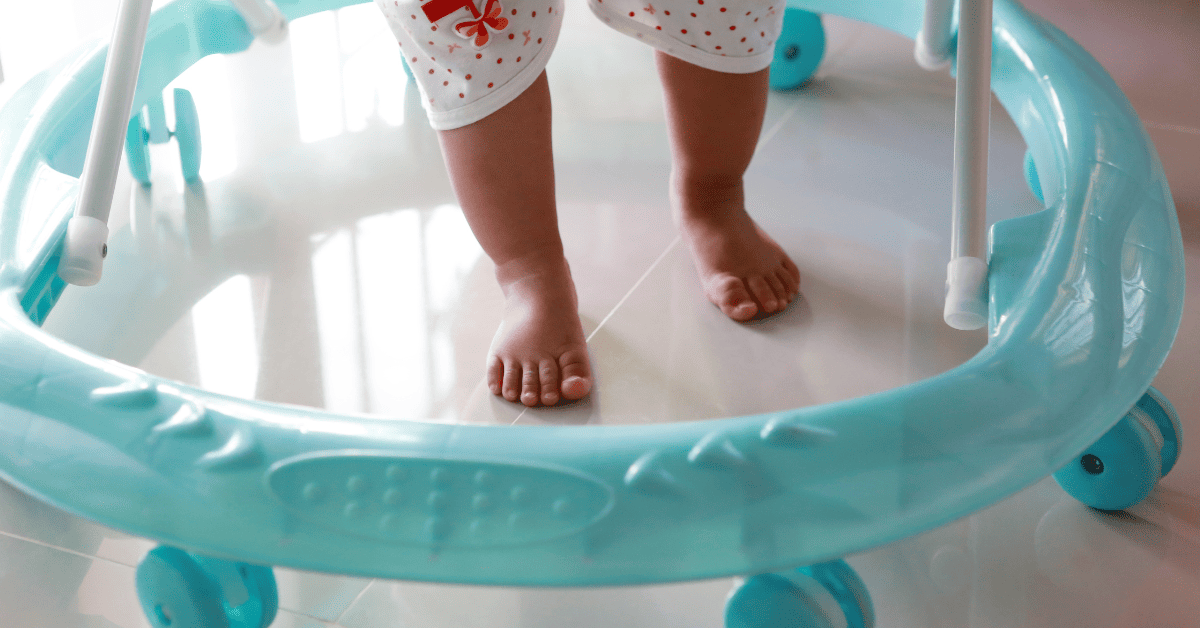
acozyfuture.com - Your baby starts trying to move, and suddenly baby walkers seem to be everywhere. Some parents swear by them, while others warn against using a walker for baby development.
With so many mixed opinions, it can feel hard to know what is actually safe and helpful. Before buying one, it helps to understand how baby walkers work, their possible risks, and what experts say about using them during your baby’s early movement stage.
Table of Contents:
What Are Baby Walkers?
Baby walkers are devices designed to help babies move around before they can walk independently.
For many parents, baby walkers seem exciting at first. Your baby starts kicking, pushing, and trying to move, and suddenly a walker for baby movement looks like the perfect way to encourage those first steps.
But once you start researching, the opinions become mixed. Some parents love them, while many experts warn against them.
So, are baby walkers actually helpful, or do they create more risks than benefits?
Are Baby Walkers Good for Babies?

Baby walkers don’t teach babies how to walk faster and may increase the risk of injuries.
In fact, some babies who use seated walkers heavily may rely on unnatural movement patterns instead of developing balance and coordination naturally.
Most pediatric experts don’t recommend seated baby walkers because of safety and developmental concerns.
At first glance, seated walkers may look helpful because babies appear to “walk” earlier. However, experts point out that the movement inside a walker is not the same as natural walking.
Read More: Baby’s First Steps: When Do Babies Start Walking?
How Do Baby Walkers Work?
A walker for baby movement usually comes in two forms: seated walkers and push walkers. Many parents confuse seated baby walkers with push walkers, but they support movement very differently.
Seated Baby Walkers
These are the classic baby walkers with wheels and a fabric seat in the center. Babies sit inside and push themselves around using their feet.
Push Walkers
Push walkers are toys babies hold onto while standing behind them. Instead of sitting, babies support their own weight while pushing forward.
Understanding the difference matters because safety recommendations are not the same for both types.
Are Push Walkers Safer Than Seated Baby Walkers?
Push walkers are generally considered safer than seated baby walkers because babies use their own balance and strength.
Unlike seated walkers, push walkers encourage babies to:
-
Stand independently
-
Shift their weight naturally
-
Practice balance
Many pediatricians prefer push walkers because babies stay in a more natural walking position.
However, supervision is still important.
Push Walker Safety Tips
-
Use only on flat surfaces
-
Avoid stairs or uneven floors
-
Stay nearby during use
Why Do Some Experts Warn Against Baby Walkers?
1. Increased Risk of Injuries
One of the biggest concerns with baby walkers is safety.
Babies in walkers can:
-
Move quickly toward stairs
-
Reach dangerous objects faster
-
Pull down hot or sharp items
Even supervised babies can move surprisingly fast in walkers.
2. Walking in a Walker Is Different From Real Walking
Inside a seated walker, babies often:
-
Push off using their toes
-
Lean forward unnaturally
-
Skip balance practice
Natural walking development usually starts with rolling, crawling, pulling up, cruising, and standing independently. Walkers can sometimes interrupt that process.
What Do Health Organizations Say About Baby Walkers?
Many health organizations discourage seated baby walkers because of injury risks and limited developmental benefits.
The American Academy of Pediatrics (AAP) has long warned against seated baby walkers due to safety concerns.
The National Health Service (NHS) also discourages seated walker use and recommends supervised floor play instead.
Many pediatric experts recommend natural floor movement over seated baby walkers for healthy development.
Safer Alternatives to Baby Walkers: Floor Play

Floor play is one of the safest ways to support natural walking development. It helps babies develop balance, coordination, and muscle strength more naturally than seated walkers.
Tummy Time
Builds neck, shoulder, and core strength.
Cruising Along Furniture
Helps babies practice balance naturally.
Push Toys
Supports standing and stepping without forcing posture.
Standing Activity Tables
Encourages leg strength and exploration.
Ironically, the activities that look the simplest often help babies the most.
Support Every Step with Comfort 💜
As your little one becomes more active and starts exploring with a baby walker, comfort and freedom of movement become more important than ever. This exciting stage helps build confidence, coordination, and independence as they take their first steps toward walking.
Cozycove Diapers are thoughtfully designed to keep your baby dry, comfortable, and ready for every adventure. Whether they're cruising around in a walker or practicing standing and stepping, you can focus on cheering them on while we take care of their comfort.
Made with ultra-soft, breathable materials and a highly absorbent core, Cozycove Diapers provide reliable leak protection without restricting movement. The comfortable fit allows your baby to move freely while staying dry and protected throughout the day.
With Cozycove Diapers, your little explorer can enjoy every step, turn, and discovery with comfort and confidence!
👉 Check out our products:
Cozycove Snooze On Diapers (Travel Pack)
Cozycove Play Hard Diapers (Travel Pack)
Common Baby Walker Mistakes Parents Make
Even parents who choose walkers often make small mistakes without realizing it.
1. Leaving Babies Unattended
Accidents can happen quickly.
2. Using Walkers Near Stairs
This remains one of the biggest injury risks.
3. Assuming Walkers Help Babies Walk Sooner
Research does not strongly support this idea.
4. Using Walkers Too Long
Extended use may reduce floor exploration time, which babies need for development.
Quick Answer: Are Baby Walkers Recommended?
-
Seated baby walkers are generally not recommended by many experts
-
Push walkers are considered a safer alternative
-
Natural movement and floor play support development best
FAQs About Baby Walkers

At what age can a baby use a walker?
Many seated baby walkers are marketed for babies around 4 to 6 months old, once they can hold their heads up steadily. However, many pediatric experts discourage their use because of safety concerns. Push walkers are usually introduced later when babies can stand and cruise with support.
Do pediatricians recommend baby push walkers?
Many pediatricians prefer push walkers over seated baby walkers because push walkers encourage more natural balance and movement. Babies use their own strength while standing and stepping behind the toy. Even so, adult supervision and safe surfaces are still important during use.
Final Thoughts: Walking Happens Best at Baby’s Own Pace
Watching your baby prepare for those first steps is exciting. It is completely normal to want to support them along the way.
While baby walkers may seem helpful at first, many experts believe babies learn movement best through natural exploration, floor play, and practice at their own pace.
Sometimes the simplest approach turns out to be the most supportive one after all.
Related Article:

Share:
How to Prevent a Diaper Blowout (Easy Tips for Parents)
When Do Babies Sleep Through the Night? A Timeline